
Your Startup Has Enough Chaos Already. Don’t Lose Your Brain, Too.
Every startup starts the same way.
Someone creates a Google Doc called:
“Final_FINAL_v3_ActuallyUseThisOne”
“Final_FINAL_v3_ActuallyUseThisOne”
Three weeks later, nobody can find onboarding instructions, HR policies live in Slack messages from February, product notes are scattered across Notion, email drafts, and someone’s desktop folder named “temp2.”
Atlassian Confluence can help bring order to startup chaos by centralizing your company’s knowledge and documentation.
And honestly? For early-stage startups trying to move fast without spending like a Fortune 500 company, the free tier is surprisingly solid.
Especially when paired with Zarpra LaunchPad, which helps startups build organized, secure, scalable IT operations before the wheels come off.
What Is Confluence?
Confluence is a business-grade company wiki and knowledge platform built by Atlassian.
Think of it as:
- Your internal company brain
- Documentation hub
- Process library
- Team handbook
- Meeting note repository
- Product documentation center
- “Please stop DM’ing me where the VPN instructions are.” solution.
It gives startups one centralized place to store, organize, and search company information without digging through Slack, email chains, or mystery folders named “misc.”
The Free Tier: Surprisingly Not Terrible
Cost: Free Forever for Up to 10 Users
That means your early startup team can build a real internal documentation platform without immediately lighting money on fire.
And unlike some “free” plans that impose extreme limitations, Confluence’s free tier allows unlimited spaces and pages, but restricts automation, storage (2GB), analytics, and access control.
What You Get for Free
Business-Grade Wiki
Create organized documentation for:
- SOPs
- HR processes
- Product specs
- Customer onboarding
- Engineering notes
- Security policies
- Vendor documentation
- Sales playbooks
- Investor prep
- “How We Do Things Here” guides
Basically: all the stuff startups swear they’ll document “later.”
Unlimited Spaces and Pages
You can create separate spaces for:
- HR
- Engineering
- Operations
- Marketing
- Product
- Leadership
- IT
- Customer Success
And yes, you get unlimited pages, version history, and macros.
So when Kevin deletes half the onboarding guide at 2AM, you can actually recover it instead of starting a workplace investigation.
Whiteboards Included
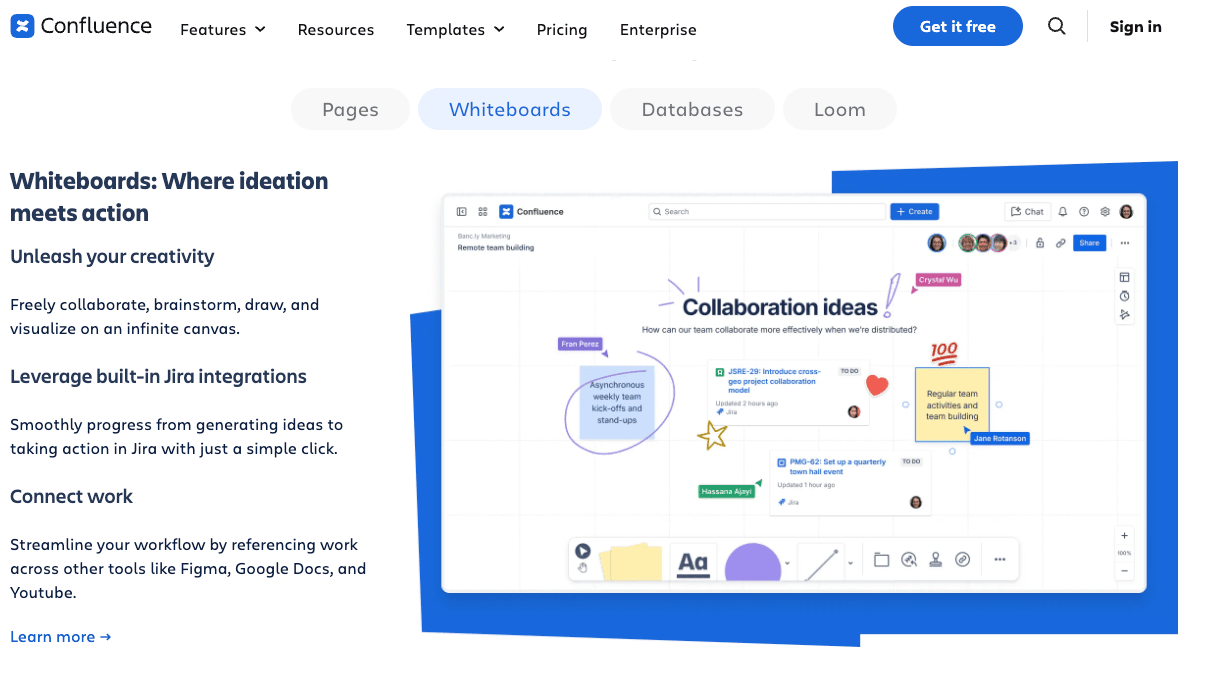
Confluence now includes collaborative whiteboards, which is huge for startups trying to brainstorm:
- Product ideas
- Workflows
- System architecture
- User journeys
- Marketing plans
- “How did we accidentally build three CRMs?” diagrams
Automation Rules
Even on the free tier, you get limited automation capabilities.
That means you can automate things like:
- Notifications
- Status updates
- Content workflows
- Task management
- Approval processes
Not bad for “free.”
Export Options
Pages can be exported as:
- Word documents
- Other shareable formats
Which is incredibly useful for:
- Training materials
- Compliance documentation
- Vendor handoffs
- Investor packets
- Internal policies
- Offline backups
Why Startups Should Actually Use Confluence
Your Company Knowledge Stops Living in People’s Heads
This is the big one.
Startups move fast. Which means:
- Processes change weekly
- Employees wear 14 hats.
- Nobody remembers where anything is
- Critical knowledge becomes tribal knowledge.
Confluence provides a clear, searchable source of truth, preventing critical operational information from getting lost as your startup grows.
It Makes Onboarding Less Painful
New hires shouldn’t need six Zoom calls just to learn:
- Where files live
- How approvals work
- What tools do you use?
- Who owns what
- How systems are configured
A well-organized Confluence setup can dramatically reduce onboarding chaos.
And yes, future-you will appreciate not having to answer the same question 47 times.
It Helps You Look Like a Real Company
Investors, partners, compliance auditors, and enterprise customers love organized startups.
A documented company:
- Looks mature
- Operates faster
- Scales easier
- Survives employee turnover better
- Makes compliance significantly easier later
This matters more than most founders realize.
The Marketplace Is Massive
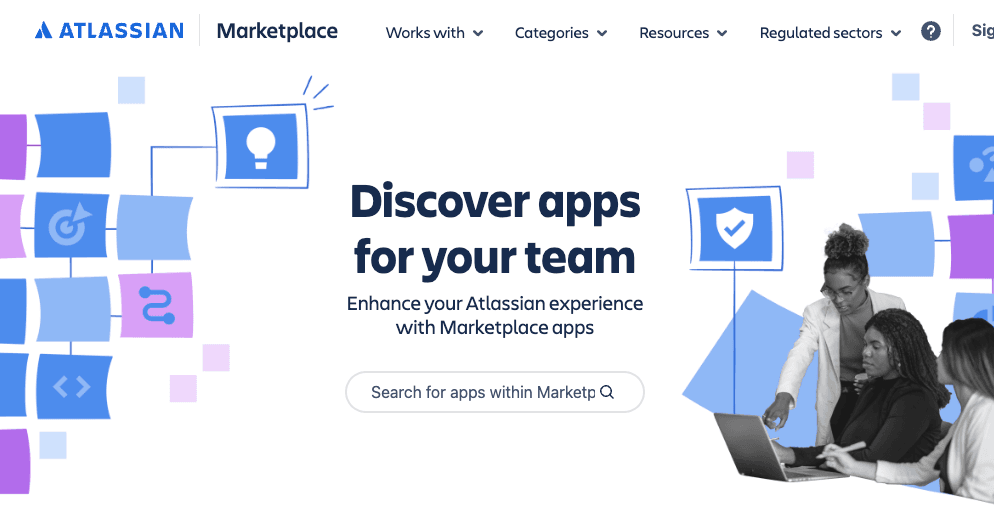
The Atlassian Marketplace has thousands of add-ons and integrations.
You can extend Confluence with:
- Diagram tools
- HR workflows
- Reporting tools
- AI assistants
- Forms
- Roadmaps
- Project integrations
- Knowledge management enhancements
Some are free.
Some are so expensive that they emotionally damage a founder.
So choose wisely.
The Free Tier Limitations You NEED to Understand
Now for the important part.
Free tools are amazing… until your startup builds its entire operational backbone on disappearing features as you scale.
Here’s what to watch out for.
The 10 User Limit
Once your startup exceeds 10 users: You’ll need to upgrade to a paid plan.
This is the moment where many startups suddenly realize: “Oh no… all our documentation lives here now.”
Which leads directly into:
- Budget surprises
- Emergency approvals
- Vendor lock-in panic
- Spreadsheet-based pricing analysis therapy
Plan ahead early.
Limited Storage (2GB)
2GB disappears fast when teams start uploading:
- Product assets
- PDFs
- Videos
- Training material
- Screenshots
- Architecture diagrams
For documentation-heavy teams, this becomes a problem sooner than expected.
No Public Links
Need to share documentation externally?
The free version does not allow publicly shareable links, so documentation access is restricted to users you add within your organization.
That can become frustrating for:
- Contractors
- Clients
- Vendors
- Partners
- External onboarding
- Shared knowledge bases
No Audit Logs or SSO
This is where startups often outgrow the free tier operationally before they outgrow it by headcount.
No:
- Single Sign-On (SSO)
- Advanced audit logs
- Enterprise-grade security controls
If your startup begins handling:
- Customer data
- Compliance requirements
- Security audits
- Vendor security questionnaires
…you’ll likely need paid plans sooner rather than later.
Limited Permissions
The free version offers reduced storage and restricted permission controls.
Which means:
- Granular access control is weaker.
- Department-level security becomes harder.
- Sensitive content management is more limited.
That’s manageable early on.
It becomes increasingly difficult to manage once HR documents and security policies pile up.
Automation Limits
Free plans are capped at:
10 automation rule runs per month
Which sounds fine until:
- Someone builds automations for everything.
- Your workflows actually become useful.
- The rules stop running halfway through the month.
Startups love automation.
Atlassian loves charging for more automation.
Nature heals.
Limited Analytics and Insights
The free version lacks robust page insights and reporting.
So you won’t easily know:
- What content gets used
- What documentation is stale
- What teams actually reference
- Which onboarding pages nobody reads, despite your efforts
The Hidden Startup Trap: Vendor Lock-In
Here’s the part most blogs skip. Confluence is fantastic.
But startups should always think ahead.
The more your company depends on:
- Templates
- Macros
- Marketplace apps
- Embedded workflows
- Atlassian ecosystem integrations
…the harder migrations become later.
That doesn’t mean “don’t use it.”
It means:
It means:
Use it intentionally.
At Zarpra LaunchPad, we help startups:
- Design scalable documentation structures.
- Avoid expensive IT mistakes.
- Build clean operational processes early.
- Understand future SaaS costs before they become painful.
- Avoid accidental vendor dependency disasters.
Because “we’ll figure it out later” becomes surprisingly expensive around employee #18.
Zarpra Recommendation
For early-stage startups, Confluence Free is one of the most effective zero-cost tools for building reliable operations from day one.
If your startup:
- Has under 10 users
- Needs centralized documentation
- Wants better onboarding
- Needs organized internal knowledge.
- Wants a scalable operational structure
…it’s a very smart starting point.
Just don’t treat “free forever” like “free forever no matter what.”
Growth changes things.
Coming Next in our Zarpra Free App Series:
Atlassian Jira for Startups
We’ll cover:
- Jira’s free startup tier
- Why startups either love it or fear it
- How to avoid building a workflow monster
- The hidden costs nobody talks about
- When Jira becomes incredibly powerful
- When it becomes “a full-time job to manage Jira.”
So yes. That one’s going to be fun.